

Thermal Spray Materials-Metal Alloy Powder
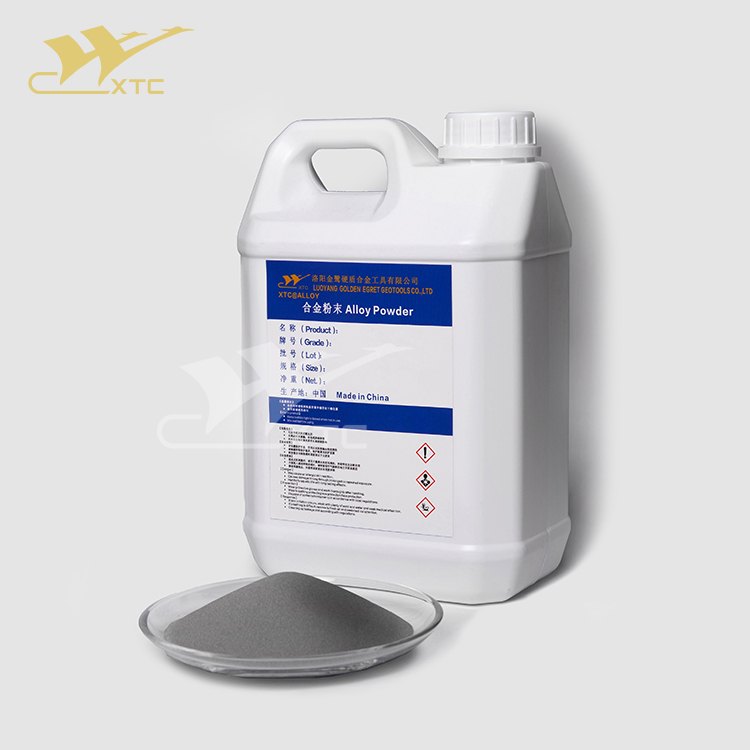
1. Normal Partical Size and Meaning
D10: In simple terms, it means that 10% of the particles have a particle size smaller than this value. Significance: It reflects the size range of the smaller particles in the powder. For example, in the Metal Injection Molding (MIM) process, the value of D10 is important for determining the size of the finest particles in the raw powder. These fine particles can fill the gaps between larger particles, affecting the powder's bulk density and fluidity. If D10 is too small, it may lead to powder agglomeration, affecting the precision of the molding process.
D50: refers to the particle size corresponding to the 50% cumulative distribution, also known as the median particle size. This means that 50% of the particles have a size smaller than this value, and the other 50% have a size larger than this value. Significance: D50 is a key indicator of particle size distribution, approximately representing the average particle size of powder particles. In many applications, such as powder metallurgy and 3D printing, D50 directly affects the performance of the thermal spray materials. For example, when printing metal powder using 3D printing, D50 determines the thermal spray powder spreading performance and forming accuracy. If D50 is too large, it may cause uneven powder spreading, affecting the printing quality; if D50 is too small, the fluidity of the powder may deteriorate.
D90: represents the metal alloy powder particle size corresponding to the 90% volume (or total quantity) of the particles in the cumulative distribution, that is, 90% of the particles have a size smaller than this value. Significance: It is mainly used to describe the size range of larger particles in the metal alloy powder. In some processes that require high uniformity of particle size, the values of D90-D10 (the range of particle size distribution) are an important reference. For example, in high-end metal powder used for electronic packaging, a smaller D90-D10 range means more uniform particle sizes, which helps to improve the quality and reliability of the packaging, as overly large particles may cause defects in the packaging structure.
D97: refers to the particle size corresponding to a cumulative distribution of 97%. This means that 97% of the particles have a size smaller than this value. Significance: D97 can more precisely describe the presence of larger particles in the powder. In some high-precision applications, such as the manufacturing of metal components in the aerospace field, it is necessary to strictly control the extremely small amount of large particles in the powder because these large particles may become stress concentration points, reducing the mechanical properties of the components. The smaller the value of D97, the less large particles are present in the powder, and the particle distribution is more towards smaller particle sizes, which is conducive to the manufacture of high-quality and high-performance metal components with best coating service.
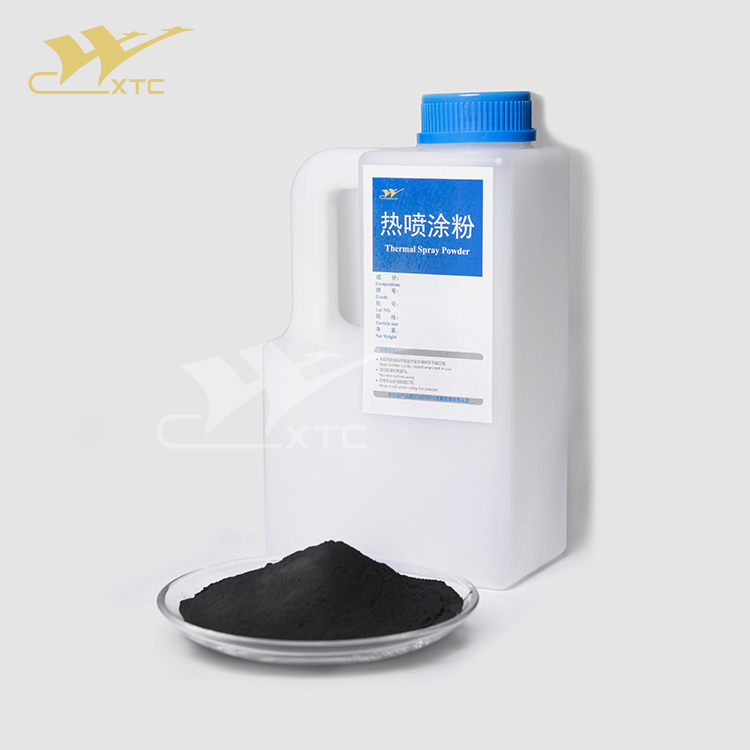
2.How to Chose the Thermal Spray Powder Partical Size Range?
3D Printing:
Partical Size Range: The commonly used particle size range of metal alloy powder is 15-53 μm (fine powder) and 53-105 μm (coarse powder). Printers using laser as the energy source are suitable for using 15-53 μm powders, while powder-bed printers using electron beam as the energy source are suitable for 53-105 μm coarse powders. Coaxial powder feeding printers can use powders with a particle size of 105-150 μm.
Manufacturing of structural components in the aerospace industry:
Aerospace structural components have extremely high requirements for the strength, toughness and reliability of the materials. Titanium alloys, nickel-based alloys and other high-performance metal powders are often used. The particle size distribution of these thermal spray powders is usually required to be narrow, with D50 generally ranging from 10 to 50 μm. Fine powders can make the structure of the fabricated parts more uniform, denser, and have better mechanical properties. At the same time, they help to reduce the weight of the structural components and improve the performance of aerospace vehicles.
Engine manufacturing: For some key components in aviation engines, such as turbine blades, the requirements for the particle size distribution and purity of the metal powder are even more stringent. High-quality fine powder is needed, with D50 possibly ranging from 5 to 20 μm, to ensure that the manufactured components possess excellent high-temperature resistance, corrosion resistance, and fatigue resistance.
Powder metallurgy industry :
Traditional powder metallurgy: For the production of some ordinary powder metallurgy components, the particle size distribution of the metal alloy powder can be relatively wide, but it is usually also desired that D50 falls within a reasonable range to ensure the fluidity and moldability of the powder. Generally, D50 is around 20-100 μm, thus ensuring that a high green body density and good dimensional accuracy can be achieved during the pressing process.
High-performance powder metallurgy: When manufacturing high-precision components for fields such as aerospace and automotive engines, the requirements for the particle size distribution of metal powders are even more stringent. Usually, finer and more evenly distributed powders are needed. The D50 value may range from 10 to 30 μm. Finer powders help improve the density and mechanical properties of the thermal spray materials.
Conventional component manufacturing in the automotive industry:
For the powder metallurgy production of conventional automotive components such as engine blocks and transmissions, the particle size distribution of the metal alloy powder can be relatively wide, with D50 ranging from 20 to 80 μm, which is sufficient to meet the basic forming and performance requirements for use.
Welacom to contact our website www.xtcgtl.com and email GEOTOOLS@cxtc.com for more product details about tungsten carbide powder, laser caldding powder, welding materials etc.