Thermal spraying is a method that uses a heat source to heat the spraying material (powder, wire or rod) to a molten or semi-molten state, atomizes it with high-speed gas flow, and sprays it onto the substrate surface at a certain speed to form a coating with corrosion resistance, wear resistance and high-temperature resistance. This technology can provide materials with anti-corrosion, wear resistance and heat insulation properties, and is widely used in industrial manufacturing fields. In recent years, with the rapid development of the new energy industry, the application value of this technology in the manufacturing of new energy vehicles has become increasingly prominent.
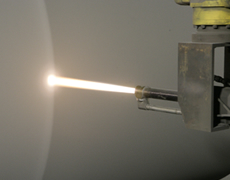
The thermal and kinetic energy of flames can be generated by burning a mixture of fuel gas and oxygen, or by electrical power. Depending on the source of energy, the commonly used thermal spraying processes include flame spraying, arc spraying, plasma spraying, explosion spraying, and supersonic spraying, etc.
Thermal Spray Materials Type
(1) According to the shape of the thermal spray materials, they can be classified as wire materials, bar materials and thermal spray powder materials. (2) According to the composition of the materials, they can be divided into metals and alloys, self-melting alloys, composite materials, ceramics, etc. (3) According to the working environment and usage requirements of the spray coating, they can be classified as wear-resistant thermal spray materials, corrosion-resistant spray materials and bonding base materials, etc. (4) According to the properties of the spraying materials, they can be divided into anti-high-temperature oxidation thermal spray coating, heat insulation thermal spray coating, corrosion-resistant coatings, wear-resistant coatings, conductive coatings, insulating coatings, functional coatings, self-lubricating coatings, bonding base materials, etc.
The main factors affecting the quality of thermal spraying
1. Selection and characteristics of thermal spray materials: The melting point, particle size, fluidity, chemical composition, and phase content of the material will affect the quality and performance of the coating. The properties and characteristics of the powder depend on the manufacturing method of the powder, including crushing and grinding, water and gas atomization, spray drying, agglomeration and sintering, etc. 2. Spray process parameters: Spray speed, spray distance, gas flow rate, nozzle shape and angle, etc. have an impact on the thickness, uniformity and adhesion of the thermal spray coating.
1. Selection and characteristics of thermal spray materials: The melting point, particle size, fluidity, chemical composition, and phase content of the material will affect the quality and performance of the coating. The properties and characteristics of the powder depend on the manufacturing method of the powder, including crushing and grinding, water and gas atomization, spray drying, agglomeration and sintering, etc. 2. Spray process parameters: Spray speed, spray distance, gas flow rate, nozzle shape and angle, etc. have an impact on the thickness, uniformity and adhesion of the thermal spray coating.
3. Surface treatment of the substrate: Surface cleanliness, roughness and preheating conditions will affect the adhesion and stability of the coating.
4. Spray environment and conditions: Temperature, humidity, air flow conditions, etc. are also factors that affect the quality of the thermal spray coating.
The typical characteristics of thermal spray technology and the applicable materials
1. Flame wire material spraying
Flame wire spraying refers to the process where the spray gun introduces acetylene, oxygen and compressed air through separate valves. Using the oxygen-acetylene combustion flame as the heat source, the end of the sprayed wire material is heated to a molten state by continuously and uniformly sending it into the flame. With the help of high-pressure gas, the molten wire material is atomized into fine particles and sprayed onto the pre-treated workpiece surface to form a coating. Flame wire spraying is a commonly used method for repairing mechanical components and preparing anti-corrosion coatings. It is often used for producing anti-corrosion flame spray coating and adjusting component dimensions. Metal wire materials are commonly used for surface spraying on large steel structures in the petrochemical, pipeline and marine markets. The equipment is simple and convenient, and has become the mainstream choice for large-scale production in workshops.
Flame wire coating is applicable to a wide range of coating materials, including metals, alloys, ceramics, and composite materials, etc. However, it can only be applied to wire or rod materials. Common flame wire coating materials include: Zn, Al and Zn-Al composite wires, Ni-Al composite wires, Mo wires, high Cr stainless steel wires, Monel alloy, bronze, Al2O3, Cr2O3 and TiO2, etc. Flame wire coating has low cost and high deposition efficiency, making it very suitable for coating Mo wires. When choosing the coating material, the main performance of the coating required by the application environment needs to be determined, such as the material's friction coefficient, wear resistance, corrosion resistance, high and low temperature resistance, and so on. Flame wire coating is usually used for anti-corrosion, wear resistance, heat conduction and other coatings, and is widely used in construction, manufacturing, aerospace and other fields.
2.Flame Spray Coating Spraying
Flame powder spraying is a process where metal or non-metal powder materials are introduced into a gas-oxygen atmosphere. Through high-temperature combustion, heat is generated, melting the materials and spraying them onto the surface of pre-treated workpieces to form a hard coating. The system usually consists of a powder feeder and a spray gun. The powder is sent to the spray gun by a carrier gas, and the mixed gas sprays the molten particles onto the workpiece surface, quickly solidifying to form the coating. This spraying process is suitable for machine part maintenance, repair and finishing, as well as for wear-resistant coatings for gap control devices. This spraying technique is relatively flexible and can be applied to metals, alloys, carbides, polymers and even ceramic powders.
3.HVOF Spray
Supersonic Flame (HVOF) spraying uses oxygen and fuel to form a combustible mixture. The liquid fuel HVOF (HVOF-LF) typically uses liquid kerosene as the fuel, while the gas fuel HVOF (HVOF-GF) uses gases such as propane, propane, hydrogen or natural gas (methane). The fuel is mixed with oxygen in the spray gun, and the mixture burns and is ejected through the nozzle at supersonic speed. Nitrogen is usually used as the carrier gas to transport the raw material in powder form into the spray gun. The combustion of the gas generates high temperature and pressure in the chamber, causing the gas to flow at supersonic speed through the nozzle. When the powder is ejected from the spray gun, the ignited gas surrounds and uniformly heats the powder material, and pushes it to the surface of the workpiece. Due to the high kinetic energy transferred to the powder particles, the powder particles melt completely or partially in the combustion chamber and during the flight through the nozzle, resulting in a coating with predictable chemical uniformity and good granular structure. In many application scenarios, coatings that are wear-resistant and corrosion-resistant are needed to protect critical components. The supersonic flame (HVOF) spraying process can produce very dense and finely structured hard coatings, thus achieving the required protective function.
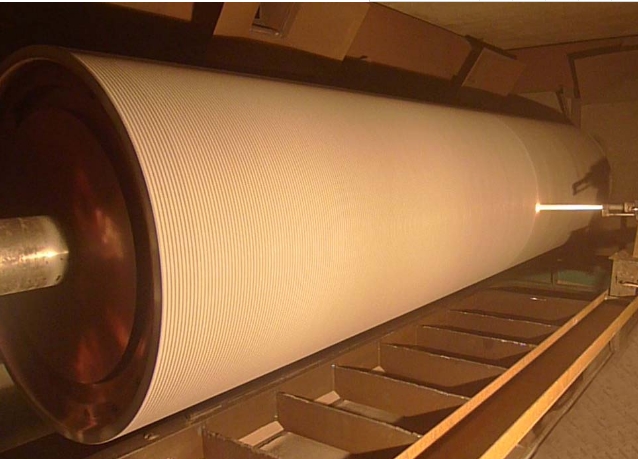
In the HVOF process, the particles either completely or partially melt, depending on factors such as flame temperature, particle residence time, material melting point, and thermal conductivity. Since the melting capacity of most HVOF spray guns and systems is limited, HVOF coating is mainly applied to metal ceramics and metal coatings. HVOF typical wear-resistant coatings are based on metal ceramics, that is, metal ceramic composites, mainly combining various mixtures of metal matrix materials, including cobalt, chromium, and nickel, as well as tungsten carbide or chromium carbide. The most common combinations include WC-Co12, WC-Co17, Cr2C3-NiCr, etc., which are widely used in applications requiring high wear resistance. Other metal ceramics used for high-temperature corrosion include WC-CoCr, TiC-CoCr, NbC-CoCr, etc. TiC metal carbide is a wear-resistant and corrosion-resistant spraying material between WC-Co and Cr3C2-NiCr, which can be applied above 700°C. TiC is not prone to forming amorphous and stable phases with Co and Ni. The high-temperature corrosion resistance of HVOF coatings has also been deeply studied, such as: Cr3C2-NiCr, NiCrBSi, Stellite-6, and Ni-20Cr, etc. The coating's high-temperature corrosion resistance can generally be attributed to the formation of oxides and spinels of nickel, chromium, or cobalt on the coating surface. The high-temperature corrosion resistance of all coatings is superior to that of bare nickel-based high-temperature alloys.
4. APS Spray Process
The principle of atmospheric plasma spraying is to generate a plasma flame stream using a plasma spray gun (also known as a plasma arc generator). A strong electric arc is formed between the positively charged electrode (anode) and the negatively charged electrode (cathode), ionizing the process gas into a plasma state. Then, the powder material is injected into the plasma jet. The powder particles are rapidly heated to a molten or semi-molten state, and are rapidly sprayed onto the workpiece surface by the high-speed ion flow. The atmospheric plasma spraying process is mainly used for functions such as protection against wear and corrosion, heat insulation, and maintenance. Atmospheric plasma spraying technology is the most widely used thermal spraying technology, with almost no material restrictions. The high temperature of the plasma is sufficient to instantly melt any known material. Therefore, the types of coatings that can be formed by plasma spraying and its applications are quite extensive, especially for spraying high-melting-point and ceramic materials. Plasma spraying has significant advantages, as it uses inert gases as the working gas, so the sprayed material is not prone to oxidation. Therefore, atmospheric plasma spraying is typically used in various situations such as thermal protection, wear resistance, corrosion resistance, size control, and component repair.